Details
All Images © Nic Lehoux
Jocelyn Art Museum – The Global Region
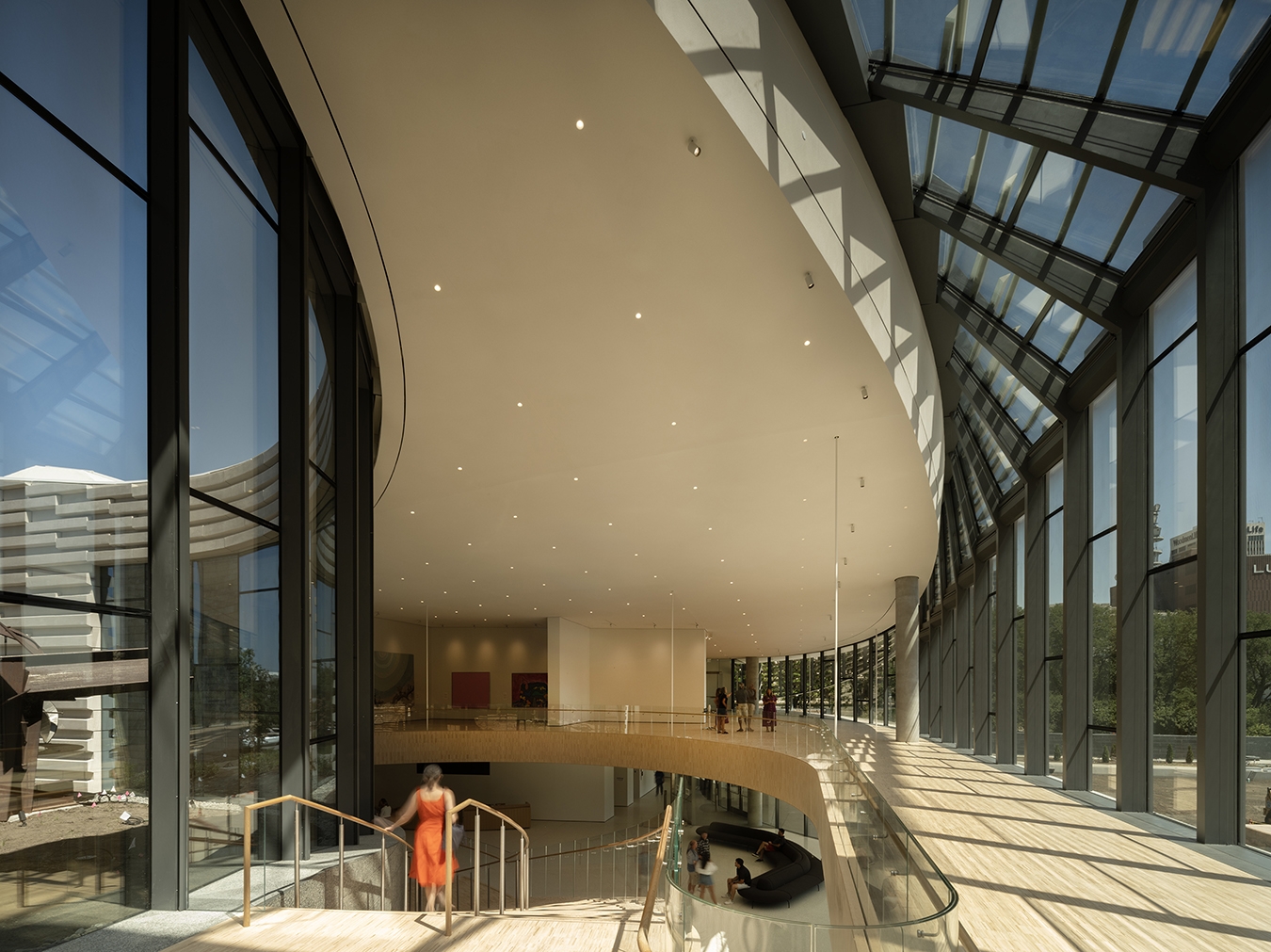
A short three-hour drive to the geographical center of the United States and nestled near the Missouri River in the iconic plains of the American Midwest, the Joslyn Museum sits at the physical and (in some respects) symbolic “heart” of the country. As such, the institution embodies the complexity of American identity and the dynamic between regional and global influence. This condition is inscribed in the museum’s collection and architecture.
The original Art Deco building by John and Alan McDonald opened to the public in 1931 as the Joslyn Memorial, dedicated by Sarah Joslyn to her late husband, the media mogul George Joslyn. Art Deco, as an international style, had origins in the Vienna Secession (which included figures like Gustav Klimt and Josef Hoffmann). It incorporates a simplified geometricization of volume and line with the more expressive color pallet of movements like Fauvism. In so doing, Art Deco became a dominant force in decorative and industrial arts, where the simplified lines of deco designs lent them to mechanical reproduction, while recent advances in finishing (including the RAL system of standardized industrial colors) allowed manufacturers to provide vibrantly colored goods.
This emphasis on manufacturing originates with the Deutscher Werkbund (from which the Secession was an offshoot), which was a collaboration between industrialists and artists with the stated purpose of developing and exporting high-quality (German) manufactured goods to the world. The choice of Art Deco for the Joslyn Memorial thus situated the museum firmly within the international art and design culture of the time. However, the decorative program of the museum, with its Thunderbird motifs and its symbolic choice of materials, including Etowah Fleuri (Georgia Pink) marble for the façade, tiles from Ohio and Pennsylvania and walls of Aquia sandstone from Virginia (the same stone used in the White House), firmly anchors the museum culturally within the context of the United States and the American Midwest.
This synthesis between international and regional influences can also be seen in the 1993 Scott Pavilion expansion by British architect Norman Foster. Foster’s approach to the museum (his first commission in the United States) is one of dignified deference. The Scott Pavilion is faced with the same Etowah Fleuri marble as the original 1931 building and takes its formal cues directly from the Joslyn Memorial building. It reemphasizes the main building’s monumental stair, and like its predecessor, it integrates regional influences with the distinctly international vocabulary of high modernism, which can be seen in the steel and glass transition between the two wings and the pure, Platonic geometry of the Pavilion.
Foster’s sensitivity to site extends to the galleries, where delicately curving ceiling details provide diffuse daylight. In a region known for its dramatic skyscapes, the use of daylight and the subtle modulation of light over time situates the Scott collection within the larger context of the American plains. This subtle gesture to the natural regional landscape is more explicit in the 2025 Rhonda and Howard Hawks Pavillion by Finland-based architectural firm Snohetta.
Snohetta’s expansion softens Foster’s Scott Pavilion by wrapping it in a nautilus-like glass shell that blurs the boundary between interior and exterior spaces with a pronounced cantilever that makes the building appear to float, while providing covered public spaces. The Hawks Pavillion’s glass façade is formally inspired by the large cumulonimbus clouds that roll across the midwestern plains. From the outside, such features are reflected in the glass, which mirrors the sky; from the inside, the viewer has visual access to the sky through tall transparent walls and skylights.
Swooping down from the peak of the Scott pavilion, the Hawks expansion includes concrete details that echo the main steps of the original Memorial building. However, unlike the Foster expansion, Snohetta’s pavilion defers more to landscape and grounds than it does to the architectural heritage of the site. In this regard, there is a conscious effort to extend the museum outward. This is expressed not only in the transparency of the new façade, but also in how the pavilion embraces its surroundings, in some instances re-establishing prior relationships with the urban context, in others creating new ones. Thus, Snohetta’s addition acts as both synthesis and culmination, physically integrating the Memorial and Scott buildings with the site, while also creating a contemporary ensemble in which the unique identities of all are alternately maintained and modulated.
In many respects, the ensemble complements the narrative prerogative of the museum, in which the juxtaposition of international and regional art across time reveals sympathies across cultures and eras. For example, the early scenes of life on the western plains depicted in works by Alfred Jacob Miller resonate with depictions of country life by French realist painters like Jules Breton and Gustave Courbet. Similarly, it is possible to read sympathies between the geometrical abstractions in pottery from ancient Persia and twentieth century works like “Untitled” by David Novros or “How To Be” by Johathan Lasker.
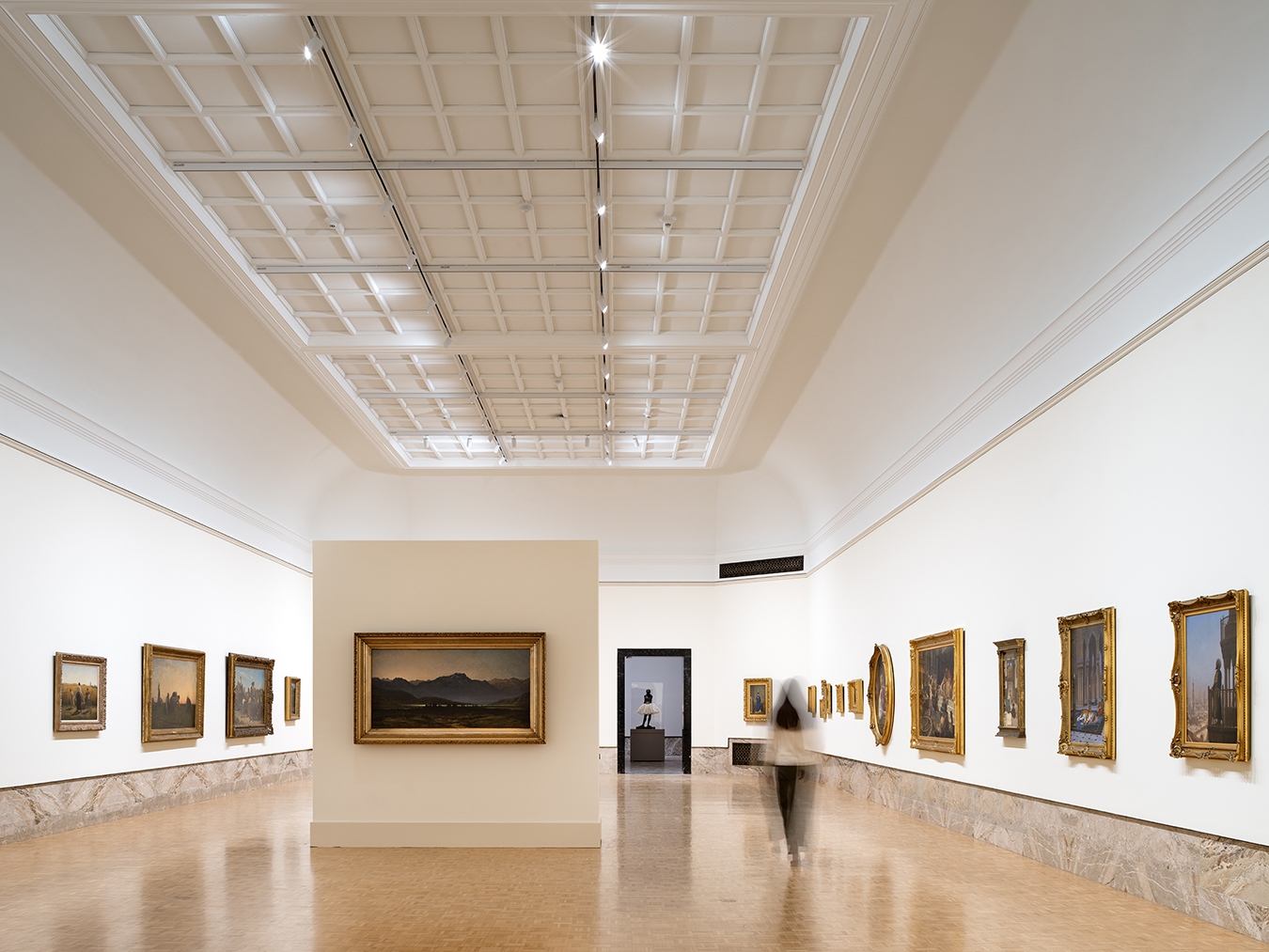
These kinds of formal correlations speak to the ever-evolving expressive language of the arts, which itself is a microcosm for our deeply human desire to find meaning and significance in our lives and the artifacts that will invariably outlive us, and potentially serve as record of our brief trespasses upon this Earth. They also reveal the ebb and flow of influence and intercultural pollination; the spark that occurs as new formal languages and means of expression are introduced into an existing tradition. Lastly, they show the interconnected nature of regional cultures and global human production.
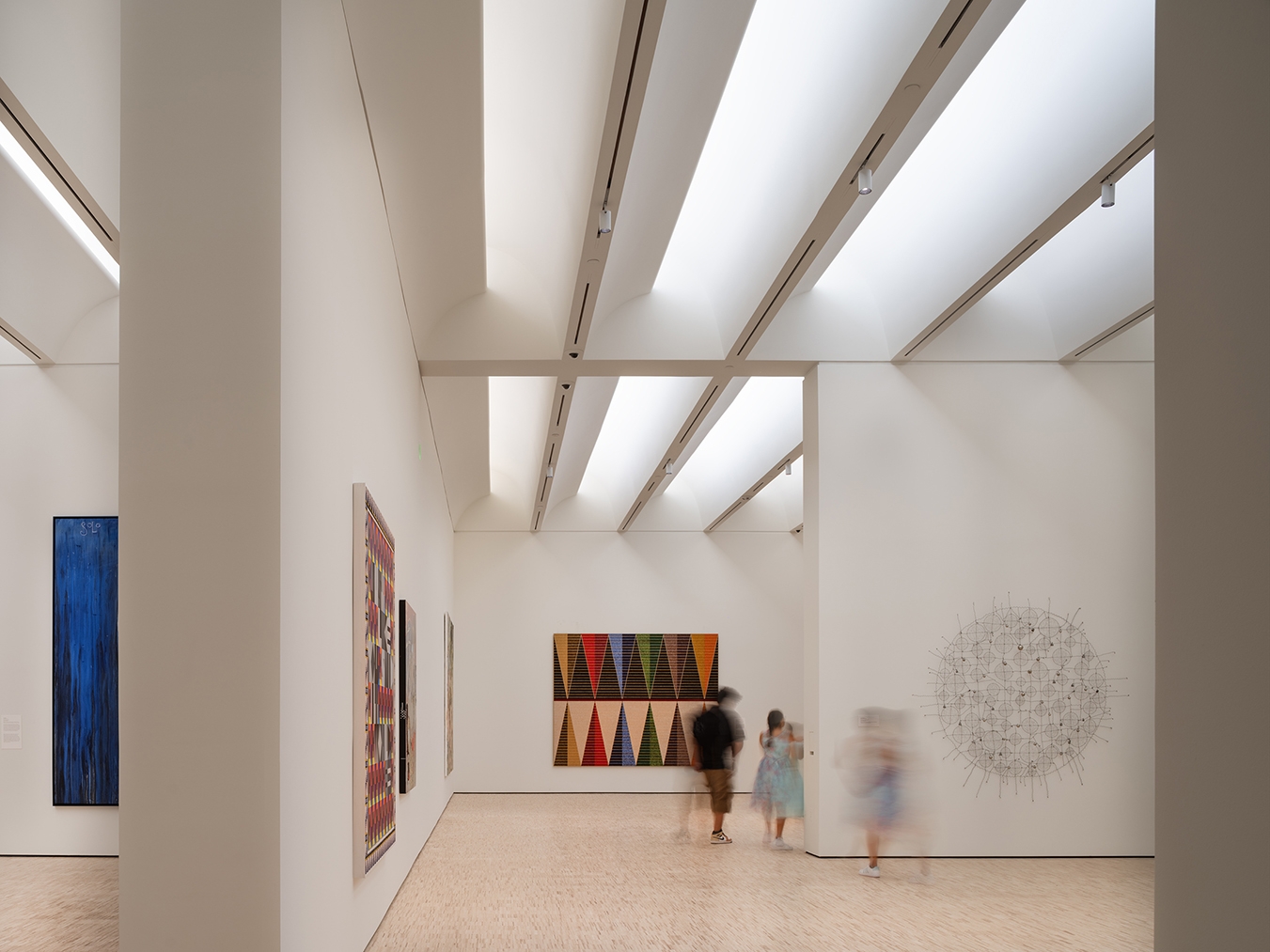
Litelab has been honored to work with the Joslyn, updating the lighting in the Scott Pavilion, and providing custom lighting solutions for the new Rhonda and Howard Hawks Pavilion.